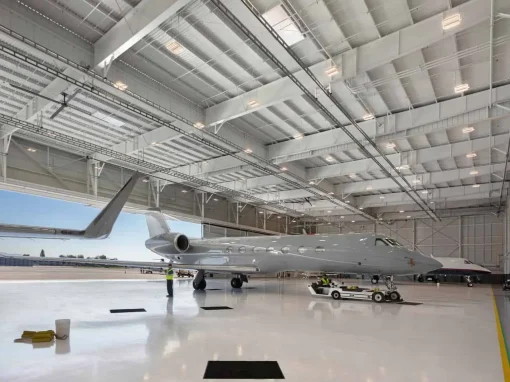
Distribution centers and warehouses present unique HVAC challenges. High ceilings, large open spaces, fluctuating occupancy, and frequent dock activity can make temperature control both difficult and energy-intensive. Without a careful, engineered design, facilities often face stratified air, uncomfortable workspaces, and skyrocketing utility costs.
The Challenges of High-Volume Spaces
- Air Stratification: Because warm air naturally rises, it often stays trapped at the ceiling, leaving the floor-level workspace cold during winter months.
- Large Air Volumes: Heating or cooling a warehouse requires moving massive amounts of air, which can be extremely costly if the system is not designed for maximum efficiency.
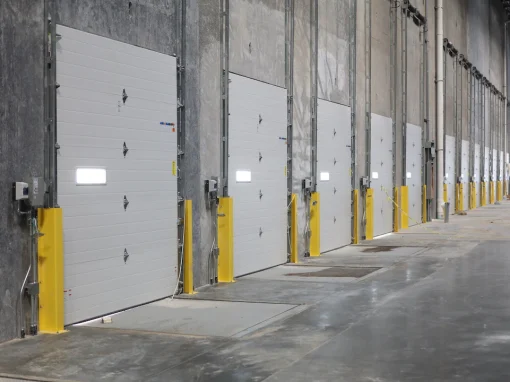
- Frequent Dock Activity: Overhead doors constantly introduce unconditioned outside air, causing sudden temperature swings and uncomfortable drafts for workers.
- Variable Thermal Loads: Heat generated by forklifts, machinery, and fluctuating worker density adds a layer of complexity to maintaining a steady setpoint.
Strategic Design for Efficiency
To maintain a productive environment in these massive facilities, we utilize several key design strategies:
Zoning and Targeted Conditioning
By dividing the facility into specific zones—such as dock areas, storage aisles, and office spaces—we can provide targeted conditioning where it is needed most, reducing waste in low-occupancy areas.
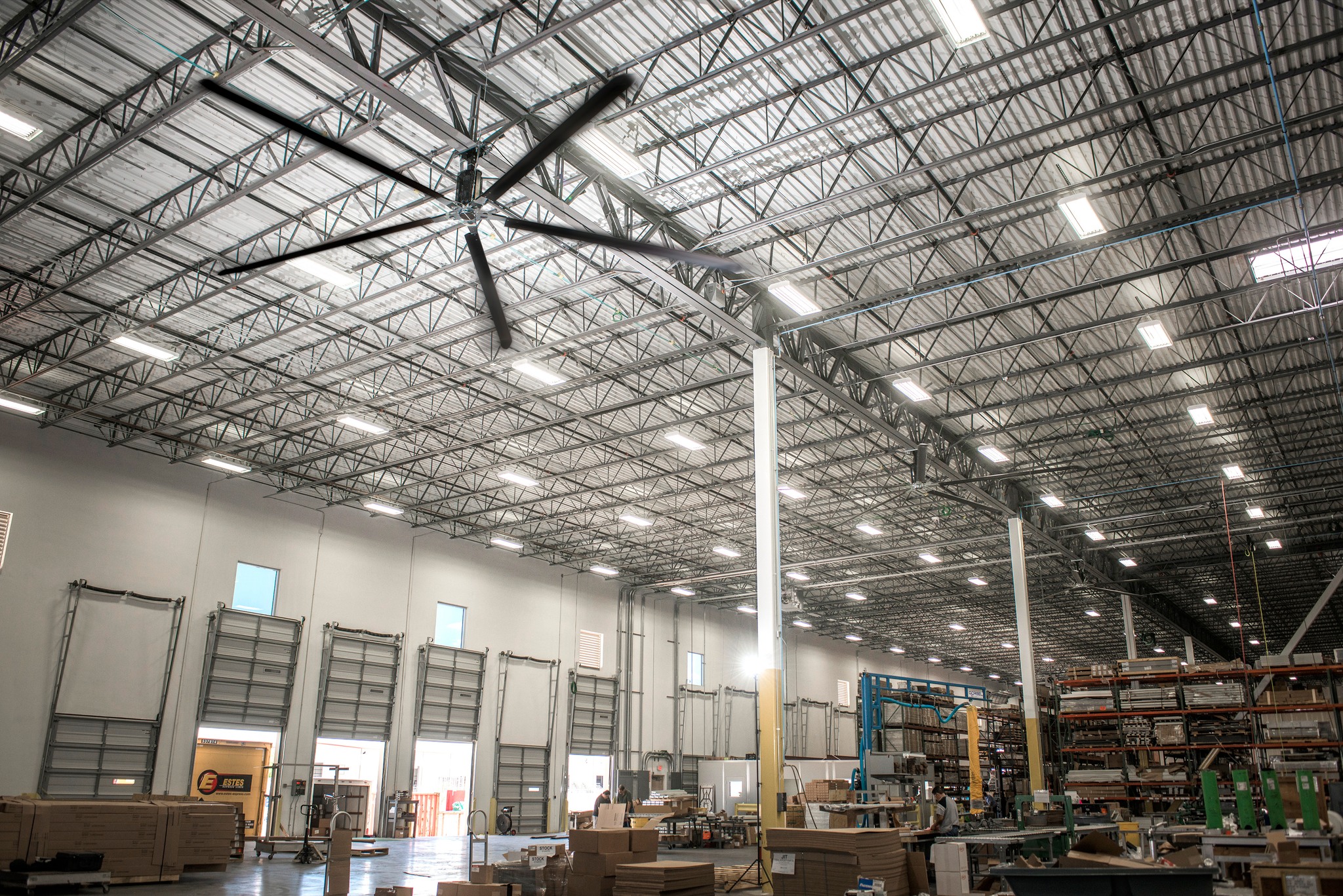
High-Volume, Low-Speed (HVLS) Fans
These fans gently circulate air from the ceiling to the floor, breaking up stratification and distributing heated air downward in the winter. This improves worker comfort without creating the harsh drafts associated with standard high-speed fans.
Unit and Infrared Heating Solutions
Gas-fired unit heaters provide rapid recovery in large spaces, while infrared panels offer efficient spot heating for specific workstations in drafty bays. These are often most effective when used in combination with HVLS fans for maximum circulation.
Tempered Make-Up Air
To combat the negative pressure created by open dock doors, make-up air units introduce pre-conditioned air. This maintains neutral pressure and keeps the workspace comfortable even during high-traffic logistics operations.
Common Pitfalls to Avoid
A common mistake is oversizing HVAC equipment, which leads to short cycling and mechanical inefficiency. Additionally, using standard ceiling fans instead of industrial HVLS fans often leaves warm air trapped near the ceiling where it does no good for the occupants. Ignoring the specific impact of dock doors can lead to massive energy loss and unpredictable temperature swings.
At ChopAir, we partner with contractors and engineers to ensure these variables are accounted for in the conceptual phase, delivering a facility that is built for both performance and long-term cost savings.