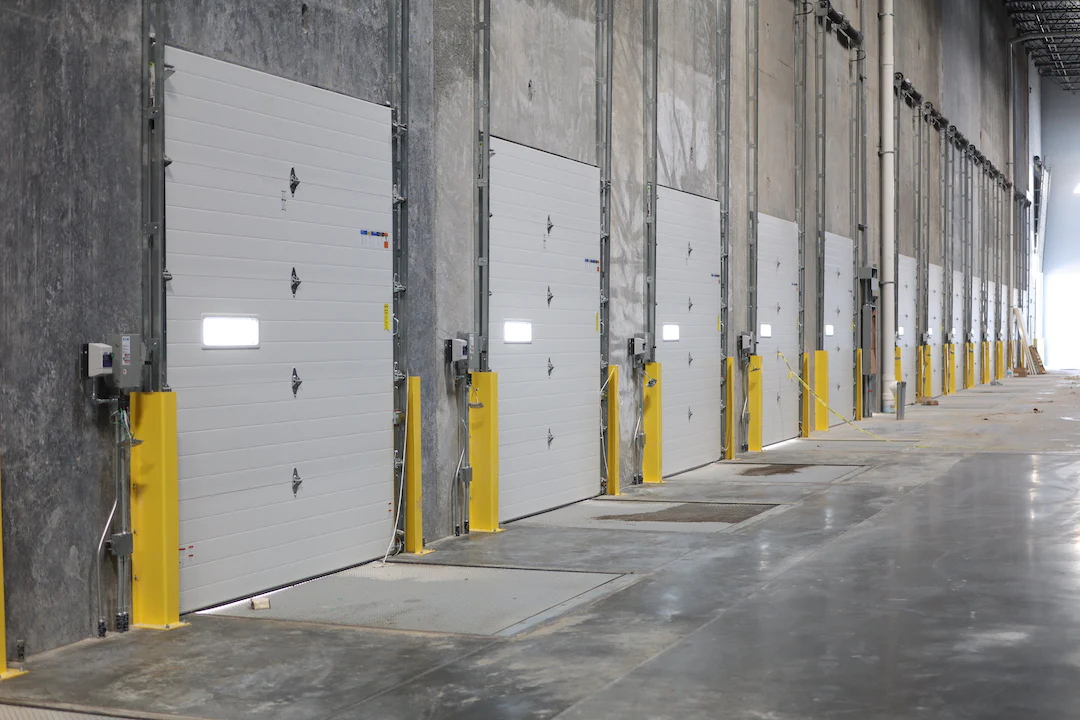
Warehouses and distribution centers often rely on large dock doors to keep logistics moving. However, while these doors are essential for shipping and receiving, they present unique challenges for maintaining a consistent internal environment. Without a strategic HVAC design, these facilities often face significant energy loss, temperature imbalances, and reduced worker comfort.
Why Dock Doors Complicate HVAC Design
- Frequent Air Exchange: Every time a dock door opens, conditioned air escapes while unconditioned outside air rushes in, leading to drafts and increased energy costs.
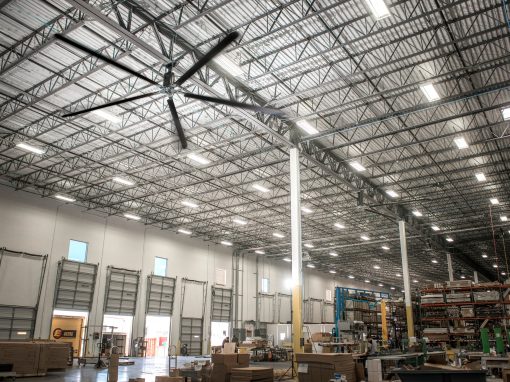
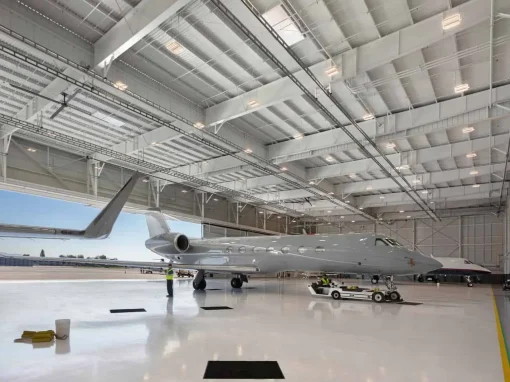
- High Ceilings and Stratification: In the winter, warm air naturally rises to the ceiling, often leaving workers at the dock level in the cold. Conversely, summer cooling can become highly inefficient without proper air circulation.
- System Strain: Traditional HVAC systems may struggle to maintain setpoints due to the continuous influx of outside air, resulting in higher operational expenses.
HVAC Design Strategies for Dock-Heavy Warehouses
To maintain operational effectiveness, we recommend several targeted design strategies:
- Zoning and Targeted Heating: Dividing the warehouse into specific dock and storage zones allows for the use of unit or radiant heaters near doors for rapid warming of work zones without affecting product safety in storage areas.
- Tempered Make-Up Air Systems: These systems balance airflow and reduce the negative pressure created when docks are open, minimizing uncomfortable drafts and preventing the HVAC units from overloading.
- High-Volume, Low-Speed (HVLS) Fans: HVLS fans gently circulate air to minimize stratification, pushing warm air down in the winter and distributing cooled air in the summer without creating uncomfortable drafts.
- Air Curtains and Dock Seals: Installing air curtains creates an invisible barrier that reduces heat loss during transitions, while properly designed dock seals prevent gaps that let outside air leak into the facility.
- Smart Controls and Sensors: Integrating door sensors allows the HVAC system to adjust output dynamically when docks are open, improving overall efficiency through variable-speed fans and heating.
Common Mistakes to Avoid
Many facilities run into trouble by oversizing HVAC units without accounting for the specific air loss at dock doors, which leads to inefficient cycling. Additionally, ignoring air stratification or failing to properly integrate dock seals can allow conditioned air to escape continuously while leaving dock areas cold and high ceilings overheated.
Properly designing for these variables ensures that your warehouse remains a productive, cost-effective, and comfortable environment year-round.